Board Governance
Executive oversight, governance responsibilities, strategic risk, and board-level decision frameworks.
-
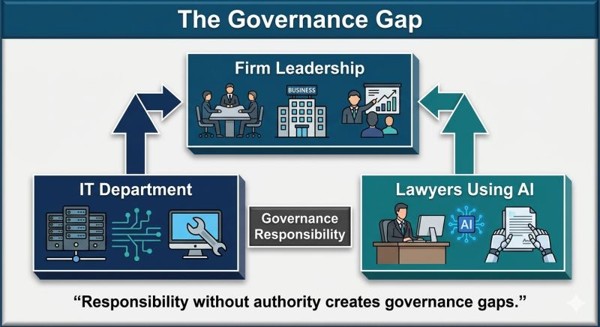
The Hidden Accountability Gap in AI Governance
Many AI governance strategies have a hidden accountability gap.IT teams manage the tools.But no one clearly owns the professional standards for how those tools are used. When AI oversight is treated solely as an IT responsibility, firms often create an unintended structural gap. Technology teams manage infrastructure, but they typically do not have authority over
-
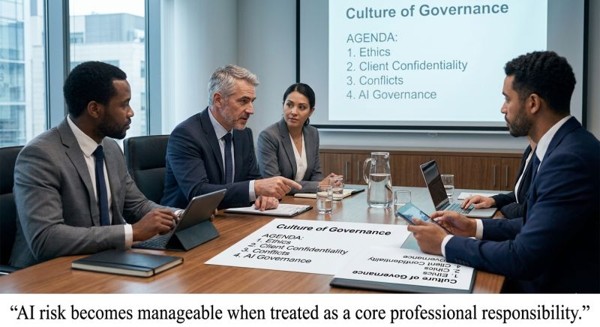
Culture Follows Leadership: The Hidden Role of AI Governance
The most effective firms signal this cultural expectation through leadership attention. When AI governance appears alongside conflicts management, ethics compliance, and client confidentiality in leadership discussions, it communicates that AI oversight is not an experimental initiative but a core professional responsibility. Over time, that signal shapes how attorneys approach both innovation and risk. How is
-
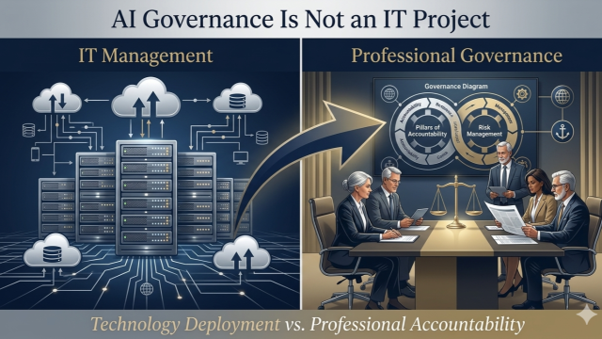
Most Law Firms Are Putting AI Governance in the Wrong Department
Most law firms are putting AI governance in the wrong department.AI oversight is often treated as an IT responsibility.But the real risks sit with leadership, supervision, and professional accountability. Artificial intelligence is often introduced into law firms through the same pathway as other technologies: vendor demonstrations, pilot programs, and IT implementation. That makes it easy
-
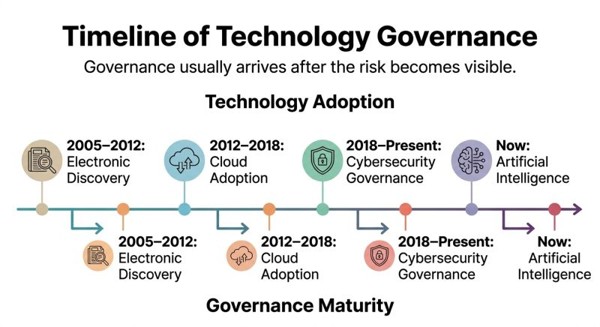
AI Adoption Is Outpacing AI Governance in Law Firms
Technology adoption always moves faster than governance.Law firms have seen this pattern before with eDiscovery and cloud adoption.AI may be the first time the lag affects the substance of legal advice. Legal technology has historically followed a familiar pattern. Tools arrive first. Adoption spreads quickly. Governance frameworks emerge only later, often after courts, regulators, or
-
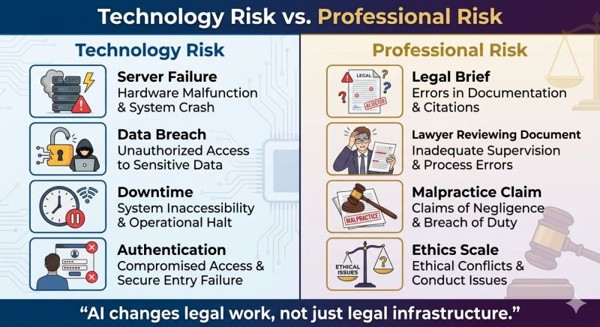
AI Creates Professional Liability Risk, Not Just Technology Risk
AI doesn’t just create technology risk for law firms.It creates professional liability risk.And that’s why insurers are starting to ask different questions about AI use. Much of the early conversation around AI in law firms focuses on technical concerns: system security, vendor integrations, and infrastructure reliability. These are important issues, but they are not the
-
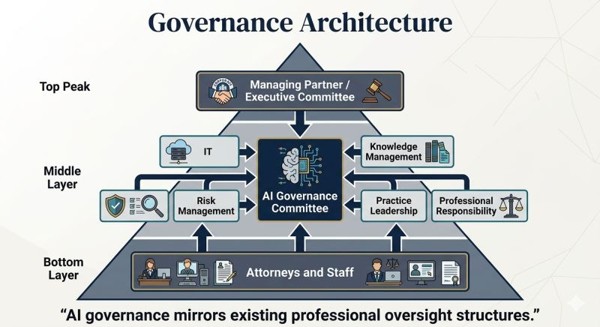
Why AI Governance Cannot Live Inside IT Alone
AI governance cannot sit inside a single department. It requires leadership ownership supported by risk, IT, and practice leadership. The firms getting this right are treating AI like conflicts and professional responsibility oversight. Effective AI oversight rarely sits within a single department. Instead, it tends to resemble other firm-wide governance functions such as conflicts management
-
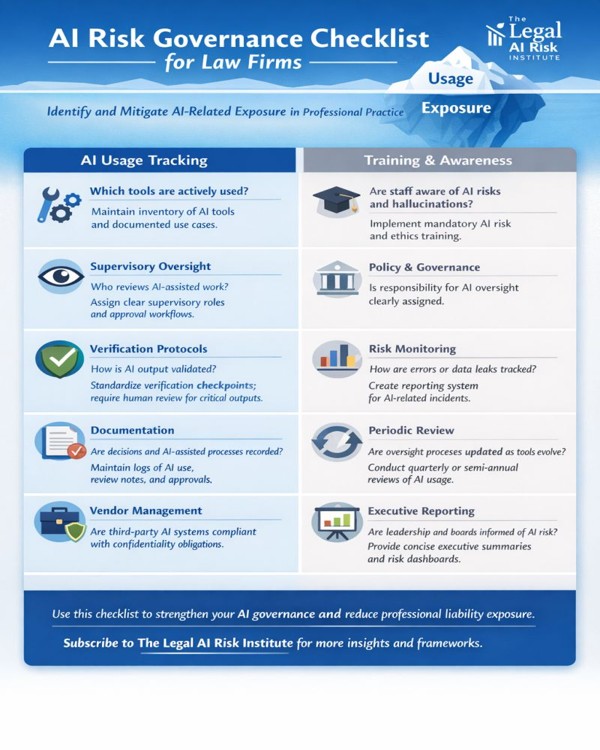
AI Governance Checklist for Law Firms: 10 Questions Every Leadership Team Should Ask
Artificial intelligence is already present in most law firms, but governance often lags behind adoption. The real risk is not simply whether AI tools are being used. It is whether firms have clear supervision, verification, documentation, and oversight around how AI influences legal work. Without those structures, the exposure created by AI can quietly grow
-
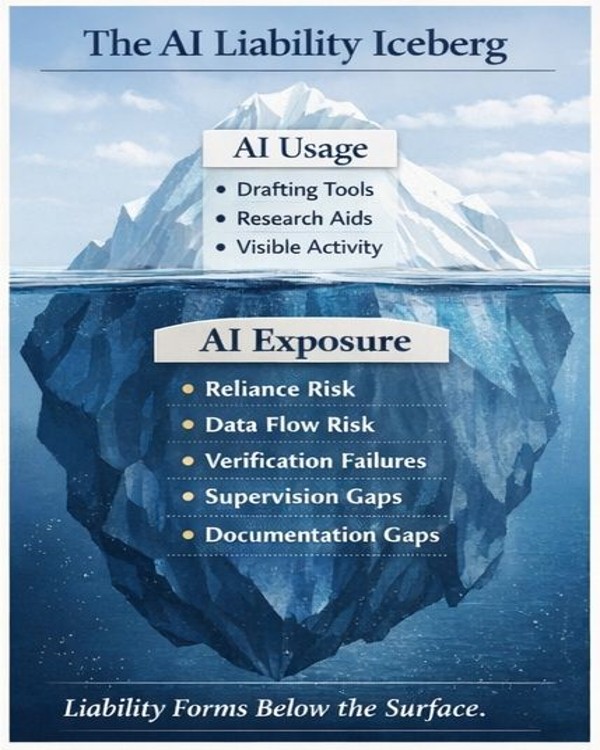
The AI Liability Iceberg: Why Risk Lies Beneath Visible AI Usage
The most visible aspects of artificial intelligence in law firms are the tools themselves. Lawyers experiment with drafting assistants, research summarizers, and analytics features embedded in familiar platforms. This visible activity represents AI usage. It is measurable, episodic, and relatively easy for leadership to observe. But the real professional liability risk rarely forms at the
-
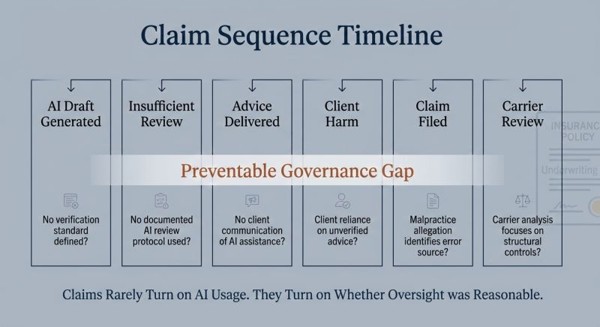
How AI Errors Become Professional Liability Claims: Understanding the Claim Sequence
Most professional liability claims do not begin with a dramatic failure. They develop through a sequence of small, ordinary events that appear reasonable at the time. The claim sequence timeline shown in this graphic illustrates how an AI-related error could move through a legal workflow before it becomes visible as a liability issue. The sequence
-
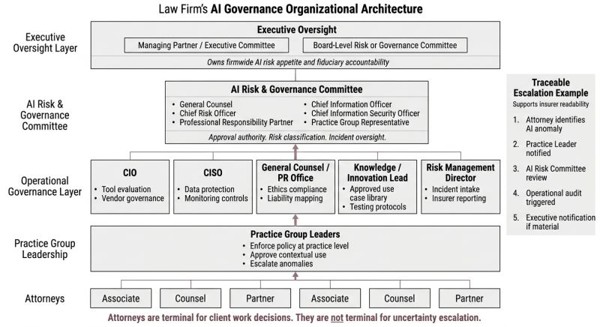
When AI Uncertainty Arises, Who Decides? Designing an AI Governance Structure for Law Firms
Law firms are beginning to experiment with artificial intelligence in uneven ways. Some have formal review processes. Others rely on informal discussions between a few interested partners and the IT department. What is often missing is a clear structure that answers a basic governance question: when uncertainty about AI arises inside the firm, where does